
Hidden Costs in Soft Goods Development — and How to Avoid Them
Why Soft Goods Blow Up Budgets
Soft goods have a way of looking simple until they aren’t. A few layers of fabric, a handful of seams, maybe some foam or Velcro, how complicated could it be? The answer, as most wearable tech product development teams eventually learn, is very. Textiles behave differently from anything else in product development. They stretch, shrink, absorb moisture, and seem to change personality with temperature, humidity, or even how they’re touched (how surprisingly relatable).
Unlike machined parts, soft goods aren’t identical from one run to the next. Small variations in weave tension, finish chemistry, or operator technique can shift fit, stiffness, or feel. Multiply that across multiple vendors, one supplying fabric, another cutting, a third sewing or bonding, and you get a supply chain where small inconsistencies become expensive fast.
Some costs are obvious and expected: sampling, prototyping, and tooling. But the ones that really hurt appear later. A fabric substitution might compromise durability. A sewing method that worked for prototypes fails at scale. A sourcing delay ripples through assembly and shipping. By the time the issue surfaces, fixing it means re-qualification, new documentation, and weeks of lost time. This article maps where those hidden costs emerge and how early textile expertise can prevent them. In soft goods, complexity isn’t what costs you; underestimating it is.
The Illusion of Simplicity
One of the biggest misconceptions about soft goods is that they’re “low tech.” Teams assume that because a product involves fabric and thread instead of circuit boards or machined parts, it must be easier, or at least cheaper, to fix problems later. That costly assumption is almost always wrong. In textiles, the smallest differences can snowball into major setbacks. Switching from a solution-dyed to a piece-dyed nylon can ruin colorfastness. Adding a wrinkle-resistant finish to cotton can make it stiffer and more prone to abrasion damage. Even a subtle change in yarn twist can alter stretch, feel, and soil repellency.

These problems usually don’t surface until after design freeze, when tooling is complete, documentation is locked, and validation has already started. By then, every “simple” change becomes expensive. Teams must requalify materials, retool patterns, and sometimes even resubmit for regulatory review. The fix isn’t more caution; it’s earlier collaboration. The sooner soft-goods specialists are involved, the less rework is required down the road. Textile experts help identify failure modes before they reach production, translating the subtle behaviors of fabric into measurable design requirements. In other words, you pay less when you stop treating soft goods like an afterthought.
Hidden Cost #1 – Sourcing Unreliable Materials
Sourcing for soft goods is rarely as simple as choosing a fabric swatch. Each material, supplier, and finish introduces its own risks in cost, timing, and consistency. The textile supply chain is deeply fragmented, with mills, finishers, and converters often operating in different regions. Each step adds potential delays and variations that ripple through production. Supplier qualification is a frequent weak spot. Many mills provide incomplete or outdated documentation, leaving gaps in fiber content, finish chemistry, or performance certification. A missed antimicrobial reapplication, a substituted yarn, or even a small shift in finishing chemistry can invalidate earlier test results without anyone noticing until verification testing fails.
Then there are the minimum order quantities that outsize early-stage needs. Mills often require hundreds of yards per color, forcing startups or pilot programs to purchase and warehouse far more material than they need or can afford. If the product changes midstream, that excess stock becomes expensive waste.
To keep sourcing from becoming a financial sinkhole, the key is definition and alignment. Establish acceptable tolerance ranges early, not just for color and texture but for stretch, breathability, and finish performance. Align sourcing geography so that materials and assembly occur within compatible lead times and freight zones. And whenever possible, validate materials and finishes under real-world conditions before scaling. Predictability doesn’t come from finding the cheapest vendor. It comes from knowing exactly what “identical” means when the product is made again six months later.
Hidden Cost #2 – Manufacturing Across Regions
Splitting production across multiple regions often looks efficient on paper but can quietly double expenses once operations begin. Each border crossed adds more than just freight costs; it adds communication lag, duplicate quality checks, and unpredictable logistics dependencies.
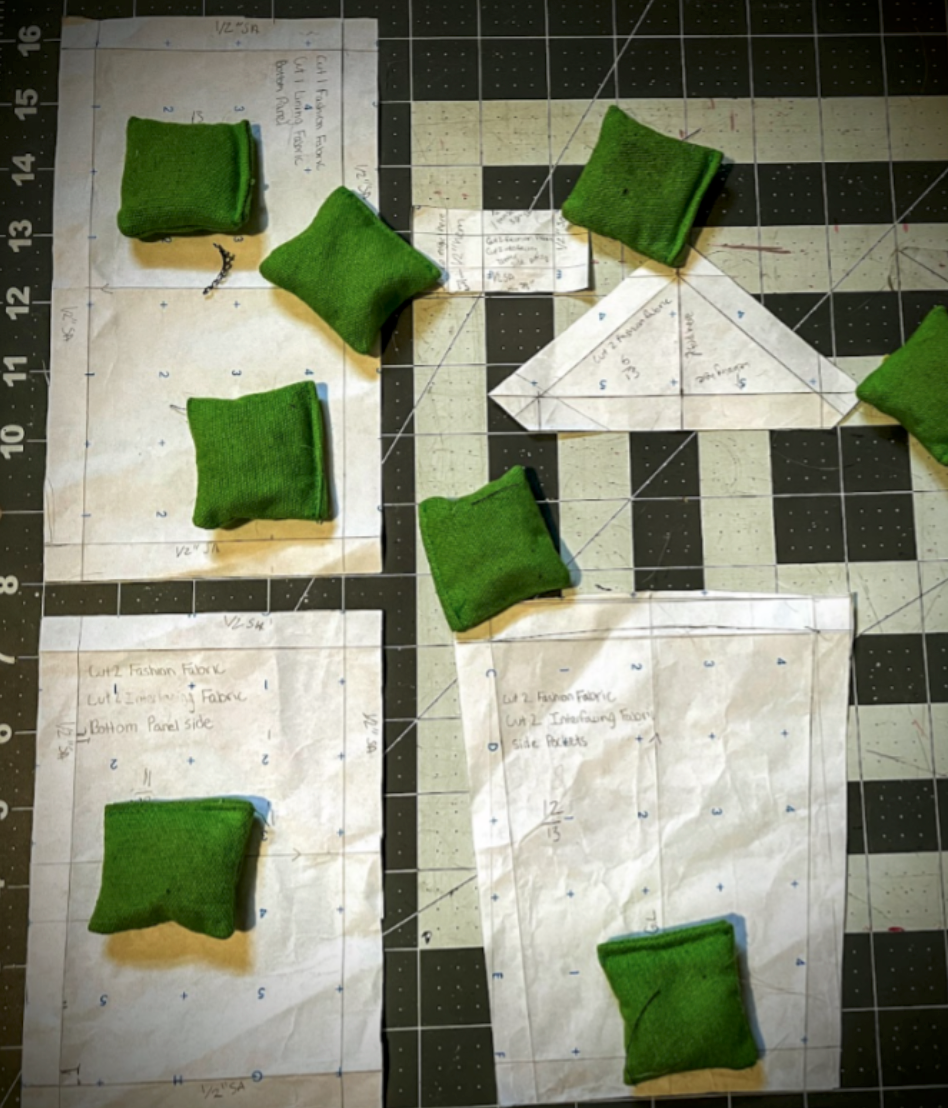
For hardware-first teams, this complexity is easy to underestimate. Components like sensors or frames might ship from one country, while textile covers or harnesses are stitched in another. Each leg of that journey introduces risk: customs delays, misaligned specifications, or incompatible material standards. When issues arise, the time spent diagnosing them across time zones can outweigh any savings from regional specialization. Even minor mismatches in seam construction or lamination pressure between facilities can result in performance discrepancies that require revalidation. A misinterpreted pattern update can mean entire batches have to be scrapped or reworked, multiplying costs far beyond the shipping invoice.
The best mitigation strategy is consolidation. Whenever possible, co-locate manufacturing streams or at least align them under shared specifications, test protocols, and quality criteria. Centralized oversight ensures that every facility interprets “the same pattern” the same way, maintaining consistency without endless back-and-forth. Global sourcing may open doors, but global fragmentation opens vulnerabilities. In soft goods, every extra mile in the supply chain is another place where alignment can unravel.
Hidden Cost #3 – Sterilization and Cleaning Compatibility
Textiles can ace every performance test in development and still fail the moment they meet real-world sanitation. Sterilization and cleaning compatibility are among the most expensive late-stage failures in soft goods and are often discovered only after production tooling or validation is complete.
Heat, moisture, and chemicals all interact differently with fabrics, coatings, and adhesives. A hydrophobic finish might break down under autoclave steam. An antimicrobial treatment can wash off after repeated sanitization. Foams or laminates that look durable in short-term trials may delaminate, stiffen, or discolor after exposure to bleach or alcohol wipes. Even subtle surface changes can compromise biocompatibility or data accuracy in medical applications.

The most damaging part isn’t the failure itself; it’s when it happens. When sterilization testing occurs at the end of development, any material change to fix those issues restarts a chain reaction: new biocompatibility testing, revalidation of manufacturing, and delayed regulatory submissions.
The fix is simple but non-negotiable: test sterilization compatibility during prototyping, not production. Expose candidate materials to the same heat, moisture, and cleaning cycles they’ll face in the field. Vet adhesives, foams, and coatings under realistic, not ideal, lab conditions. Building this validation early ensures that a product designed to last through hundreds of cycles actually can without taking the budget down with it.
Hidden Cost #4 – Assembly and Construction Oversight
A sewing or bonding method that works beautifully in a prototype often falls apart when scaled to production. What seems like a small construction choice (stitch type, seam allowance, bonding temperature, etc.) can dramatically change how a product fits, stretches, or bears load. Once you add multiple operators, machines, and materials, those tiny differences compound into quality drift.
Efficiency plays a role too. Poor marker layouts waste fabric and drive up cost per unit. Even a few millimeters of extra spacing between cut pieces can multiply into yards of lost material over a production run. Grain direction, layer alignment, and cutting accuracy all affect comfort, shape retention, and aesthetic consistency.
Many teams assume contract manufacturers will “figure it out” in production... and they will. But without detailed soft goods specifications, you may not be happy with how they choose to fill in the blanks. And guessing leads to variation. The fix is straightforward: involve soft goods engineers early enough to design patterns, seam constructions, and bonding processes that scale predictably. A prototype that’s built for manufacturability is far cheaper and far more consistent than one held together by best guesses and wishful thinking.
The True Cost of Late Changes
Nothing derails a launch faster than discovering a product failure late in development. Once a design is locked, every “simple” change becomes a chain reaction. When materials shift, mechanical and biocompatibility tests have to be repeated. New suppliers mean new traceability records. Even small tweaks can trigger updates to labeling, risk assessments, and verification reports. What might have cost a few hundred dollars to test during prototyping can balloon into tens of thousands once tooling, certification, and regulatory review are underway.
The financial hit is only part of the problem. Late changes strain relationships between partners, delay launches, and erode credibility with investors and clinicians alike. Preventable problems are always the hardest to justify. The takeaway is simple: validate materials, finishes, and construction early; before they become dependencies baked into the documentation. It’s the difference between a controlled design cycle and a six-month setback.
Building a Cost-Resilient Process
Most pain points in soft-goods development come down to timing, not talent. Teams rarely fail because they lack expertise; they fail because the right expertise shows up too late. By the time soft-goods specialists are brought in, the hard components and vendor relationships are already locked in, forcing textiles to adapt to constraints they should have helped define.

Building a cost-resilient process means integrating textile and human-factors specialists from the start. Having the right expertise early makes it possible to predict pain points before they turn into problems. A mechanical engineer can’t know that a clutch will destroy the chosen fabric if there’s no soft-goods engineer there to warn them.
The goal is predictability. Centralizing production or aligning suppliers under shared specifications cuts down on freight, inspection, and translation errors. Consistent testing methods for laundering, sterilization, and wear extend reliability across batches. And when textile documentation is built into the design history file, regulatory review becomes faster, not harder.
When teams plan for variability instead of reacting to it, budgets stabilize, timelines shrink, and prototypes evolve into manufacturable, validated products with far fewer surprises. In soft goods, you don’t pay for complexity; you pay for ignoring it until it’s too late.

